Gold Standard Certified. And Why That Matters for Carbon Credits from Waste.
In 2022, we asked a question that sounded ambitious at the time: could the CO2 avoided by recovering metals and minerals from incinerator bottom ash be turned into a tradable carbon credit, under one of the most rigorous standards in the voluntary carbon market?
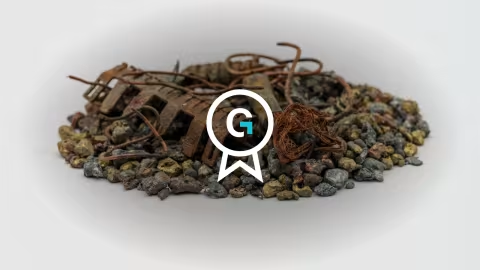
Four years of methodology development, data collection and independent scientific review later, the answer is yes. Selfrag's CO2 savings from our Centro Uno facility are now Gold Standard certified carbon credits, endorsed by ICROA and approved by the Integrity Council for the Voluntary Carbon Market (ICVCM), and available to trade through our partner South Pole.
This is a new kind of climate contribution for the voluntary market: industrial, physically anchored, and permanent by design. Here is what we are certifying, and why it matters for buyers.
Four years of methodology work
The path from that first question to today's certification ran through four years of work with our partner South Pole, who brought deep expertise in voluntary-market methodologies. The underlying High Voltage Pulse technology has been developed in close collaboration with research institutes including ETH Zürich and the University of Bern. The result is a conservative, transparent and reproducible framework, now certified to the Gold Standard.
What we are certifying
Our Centro Uno facility in Full-Reuenthal (AG) has been in operation since 2024. It processes incinerator bottom ash (IBA), the heavy residue from Swiss waste-to-energy plants. Historically, IBA has gone to landfill, and with it recoverable iron, non-ferrous metals and clean minerals.
Our patented High Voltage Pulse (HVP) technology changes that. Short, high-intensity electric pulses fragment the ash selectively along the grain boundaries between minerals and metals, enabling efficient downstream recovery. Up to 50 percent of each tonne re-enters industrial value chains as secondary raw materials.
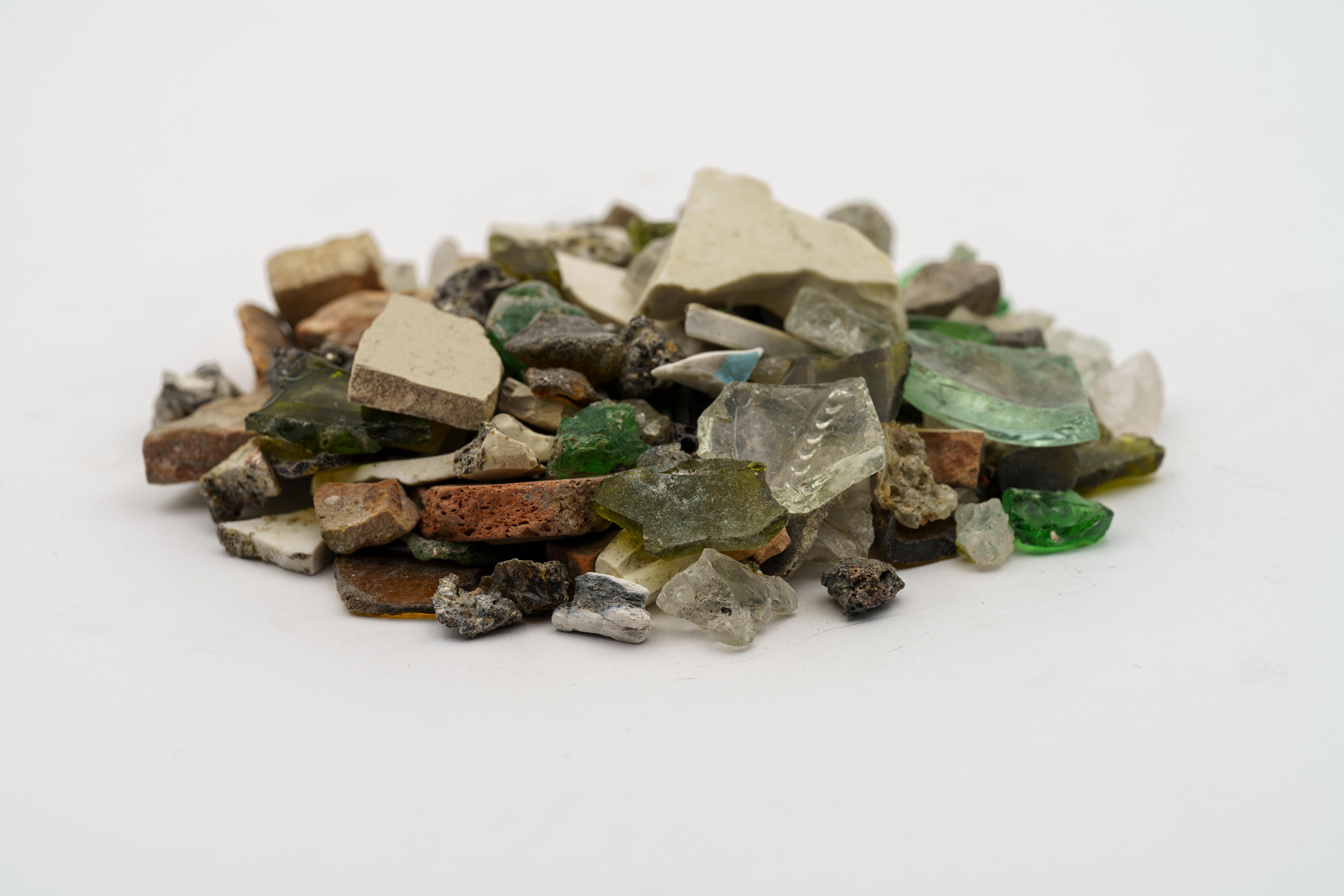
Every tonne of recovered material replaces primary raw materials from mining and processing, and the CO2 emissions that would have been released during that primary extraction are avoided. That avoidance is where the credit comes from. As of 30 June 2025, Centro Uno has cumulatively avoided 13,342 tonnes of CO2, all independently measured and verified, with around 14,000 tonnes more generated in the year since (July 2025 to June 2026).
Industrial, not nature-based
Most carbon credits on the voluntary market today come from nature-based projects: forests, wetlands, soil. They are valuable, but they carry a structural challenge. A reforestation can burn; a protected forest can be logged. Buyers end up accounting for reversal risk, buffer pools and long-horizon permanence reviews.
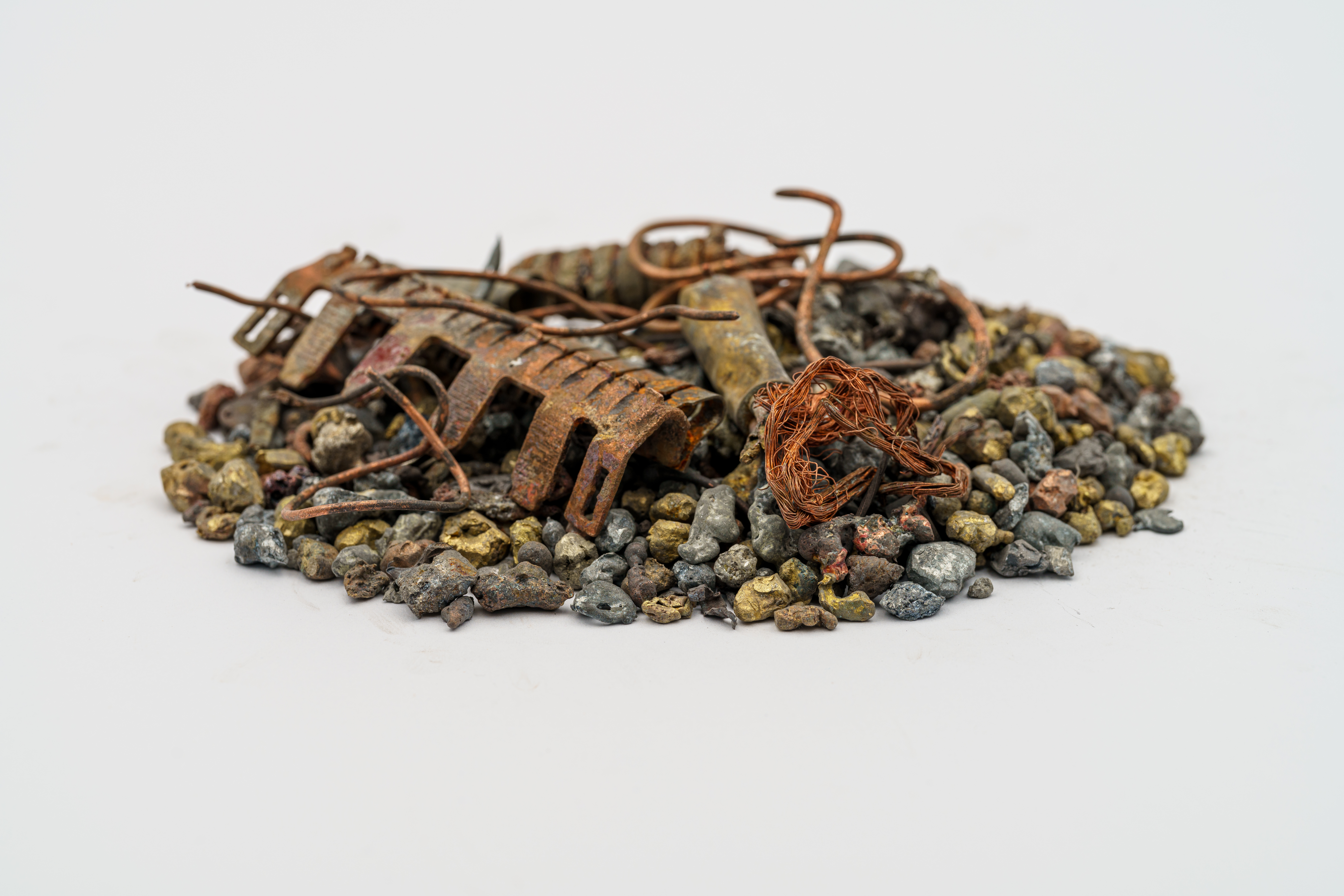
Selfrag's credits are different. They are anchored in physical material recovery. Once iron is recovered from incinerator bottom ash and goes into a steel mill as scrap, the CO2 that was not emitted during primary iron-ore mining is simply not emitted. There is no forest that can burn down, no project that can be cancelled. We call this industrial permanence: no reversal risk, no buffer pool required.
Why buyers should care
The voluntary carbon market has matured. Standards are tightening, and buyers are more selective. The ICVCM's Core Carbon Principles and ICROA's endorsement criteria have become the bar. Gold Standard credits, endorsed by ICROA and approved by ICVCM, are among the most credible instruments available today, and Selfrag's credits enter the market under exactly these labels, with the added property of industrial permanence.
For buyers, that means three things:
- Physical traceability. A direct relationship between material recovered and emissions avoided, a measurement rather than a projection.
- Minimal tail risk. No buffer pool, no reversal provisions, no long-horizon uncertainty.
- Swiss integrity. Credits from a Swiss-regulated industrial facility, certified under the Gold Standard and independently verified.
What comes next: Centro Due and Centro Tre
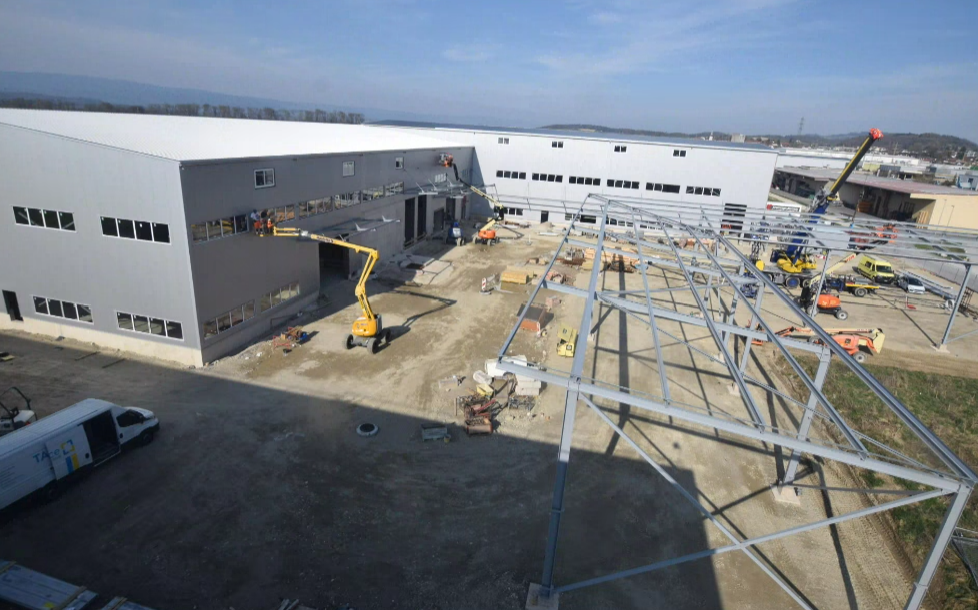
Centro Uno is only the beginning. Centro Due, currently under construction in Kerzers (FR), will add around 22,500 tonnes of CO2 savings per year from later this year. Centro Tre is in planning, and additional waste-to-energy plants are under evaluation. Over the medium term, our pipeline scales toward 70,000 tonnes of certified CO2 savings per year, as we target up to 50 percent market share of the Swiss IBA volume. Each new facility becomes its own certified project under the Gold Standard methodology, independently validated.
How to buy
Credits are issued and traded through our partner South Pole. For buyer inquiries, media requests and partnership discussions, get in touch with our team on our CO2 credits page.
A climate contribution that is industrial, permanent and verifiable. Swiss-made.
Questions about this article or our technology?
Get in touch ›Latest news
Lightning in water: how High Voltage Pulse fragmentation works
There is no free lunch in industrial carbon credits