
Lightning in water: how High Voltage Pulse fragmentation works

How does the High Voltage Pulse technology work? It is one of the questions we get most often. This is the longer answer.
A discharge that travels through the material itself
The visible part of what we do at Centro Uno is industrial. Bottom ash from waste-to-energy plants enters one end of the process, and recovered metals and minerals come out the other. The interesting question is what happens in between.
The core process is called High Voltage Pulse fragmentation, or HVP for short. In academic literature it is also known as electrodynamic fragmentation.
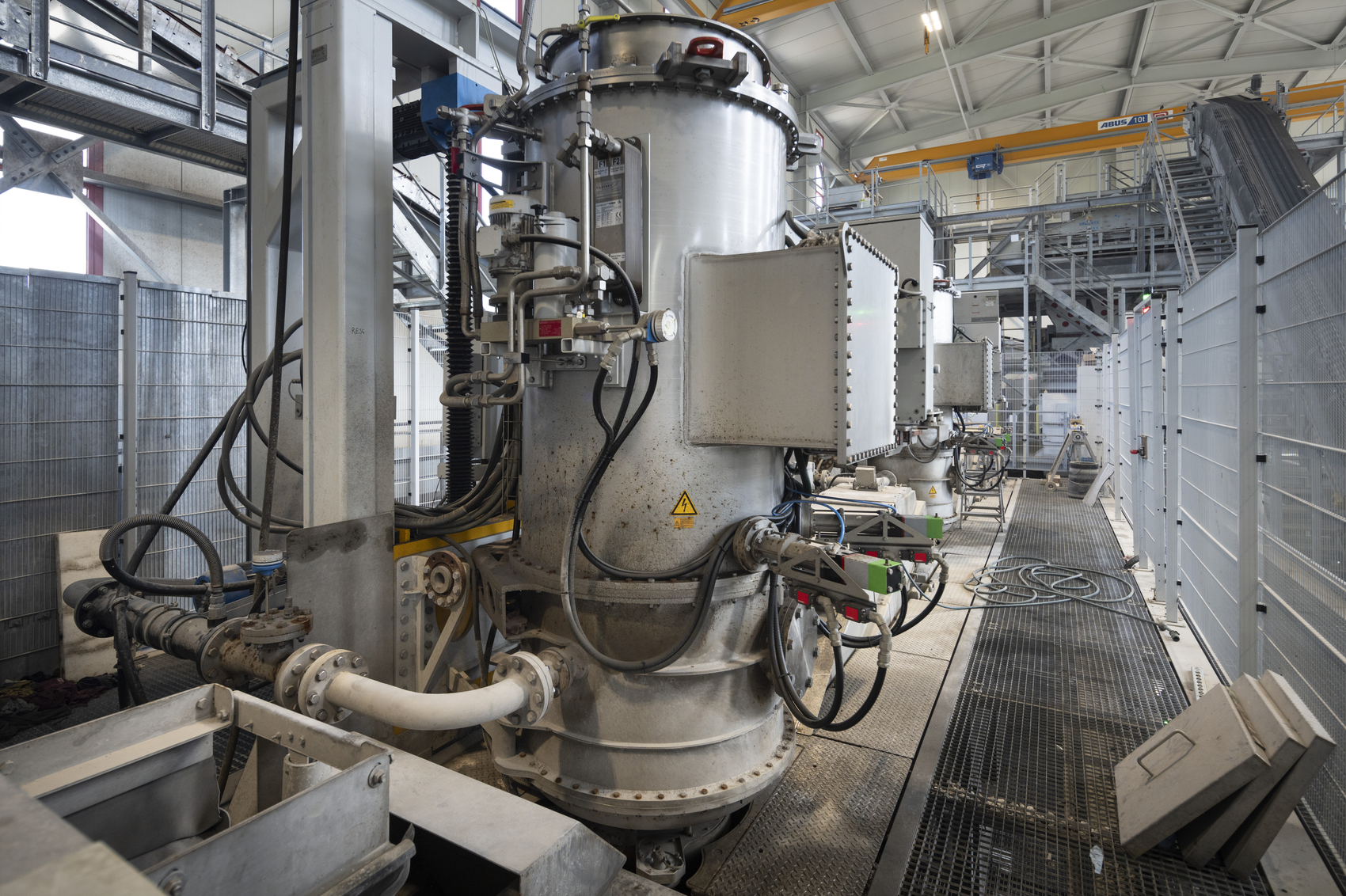
The principle is this: a high electric field is generated between two or more electrodes by applying high voltage pulses. In our process, pulses of around 200,000 volts are applied to a water-filled chamber in which the bottom ash is suspended.
Under normal conditions, water is conductive enough that one might expect the electrical discharge to occur through the water. However, at very high voltage and with pulse rise times of only a few hundred nanoseconds, water behaves counter-intuitively. Under these short-pulse conditions, water can act as a better insulator than the solid material immersed in it. As a result, the discharge can preferentially propagate through the material itself.
Tiny electrical channels, called streamers, begin to grow from the electrodes. These streamers preferentially develop in the regions where the electric field is locally enhanced, for example near phase boundaries, grain boundaries, inclusions or different metal particles within the material. When the streamers bridge the gap and pass through the material, a full electrical discharge occurs. At that moment, a plasma channel is formed. The rapid expansion and collapse of the plasma channel generate powerful shockwaves inside and around the material. Those shockwaves break the material apart predominantly along existing weak points such as grain boundaries and interfaces. The result is a highly selective fragmentation process. Instead of simply crushing everything into smaller pieces, HVP helps liberate different components from each other without over-grinding them.
Why "along grain boundaries" matters
A mechanical crusher reduces material mainly by force. It crushes the material as a bulk object, regardless of internal structure. A piece of copper trapped inside a mineral matrix may be pulverised with the surrounding mineral.
HVP works differently. By splitting along grain boundaries, it separates what is already separable. A copper inclusion can be liberated as recoverable copper. A mineral fraction can be separated more cleanly. An iron particle keeps its useful properties. The process leaves clean materials with minimal residues.
That is why downstream sorting works more efficiently and reaches higher material qualities than standard methods. It is what makes industrial-scale metal recovery from bottom ash economically and technically viable.
From mining to waste-to-value
The technology did not start with bottom ash. HVP fragmentation was originally developed to improve ore mining processes, silicon in particular, where preserving crystal structure mattered. After testing several ores, it became clear that bottom ash also contains valuable metals and mineral components. Instead of treating it only as waste, it can be treated as a secondary raw material. The recycling potential and the environmental benefit became additional drivers in developing the technology further. Selfrag took the underlying physics and built an industrial-scale process around a different input stream than mining: incinerator bottom ash from Swiss waste-to-energy plants.
Centro Uno in Full-Reuenthal has been running commercially since 2023. Centro Due in Kerzers is under construction, with start-up planned for Q4 2026. The industrial application is protected by patents. The water-based closed-loop design, the staged sorting that follows fragmentation, and the integration with Swiss waste-to-energy infrastructure are all proprietary.
What comes out
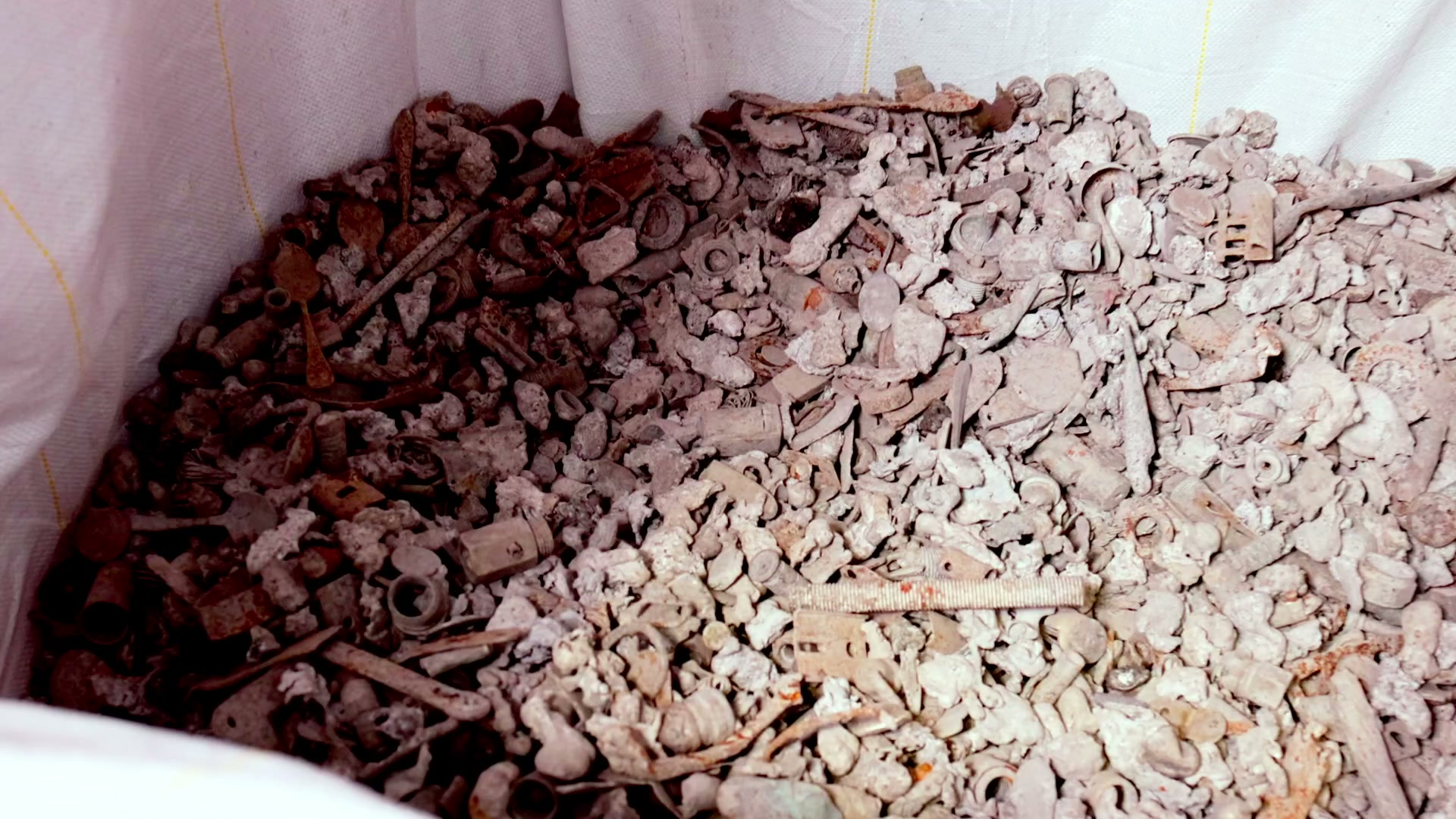
Per tonne of bottom ash that enters the process, the recovered fractions typically split into ferrous and non-ferrous metals such as aluminium, copper, and precious metals such as gold and silver, plus a clean mineral fraction suitable for further use. The recovered materials re-enter the economy and replace virgin material. The mineral fraction can be supplied to the cement industry, depending on quality and application requirements. As a rule of thumb, around half of the input mass can leave the process as recovered material with a defined route for reuse.
An older technology, a newer methodology
HVP is the engine. It has been recovering metals at industrial scale for years, before this work was being turned into verifiable carbon credits.
What got added on top is everything that turns those avoided emissions into a credit a serious buyer can pay for. Mass-balance audits. Emissions accounting against the appropriate industry baselines. Mineralogical traceability. Independent academic and technical review. That is a separate, four-year piece of work that lives on top of the technology, not the other way around.
The technology answers the question of what is physically possible. The methodology answers the question of what a serious 2026 buyer can defensibly pay for. Both have to work together for industrial-scale carbon credits to hold up.
Questions about this article or our technology?
Get in touch ›Latest news
Gold Standard Certified. And Why That Matters for Carbon Credits from Waste.
There is no free lunch in industrial carbon credits