Lightning in water: how High Voltage Pulse fragmentation works

How does the High Voltage Pulse technology actually work? It's one of the questions we get most often. This is the longer answer.
A discharge that travels through the material itself
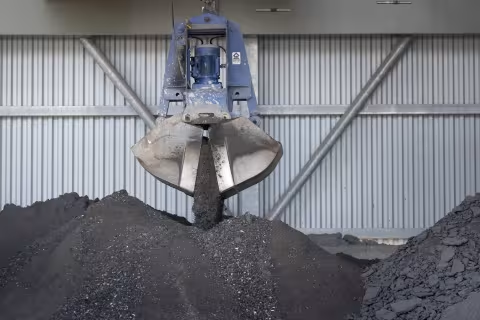
The visible part of what we do at Centro Uno is industrial. Bottom ash from waste-to-energy plants enters one end of the process, and recovered metals and minerals come out the other. The interesting question is what happens in between.
The core process is called High Voltage Pulse fragmentation, or HVP for short. In academic literature it goes by electrodynamic fragmentation.
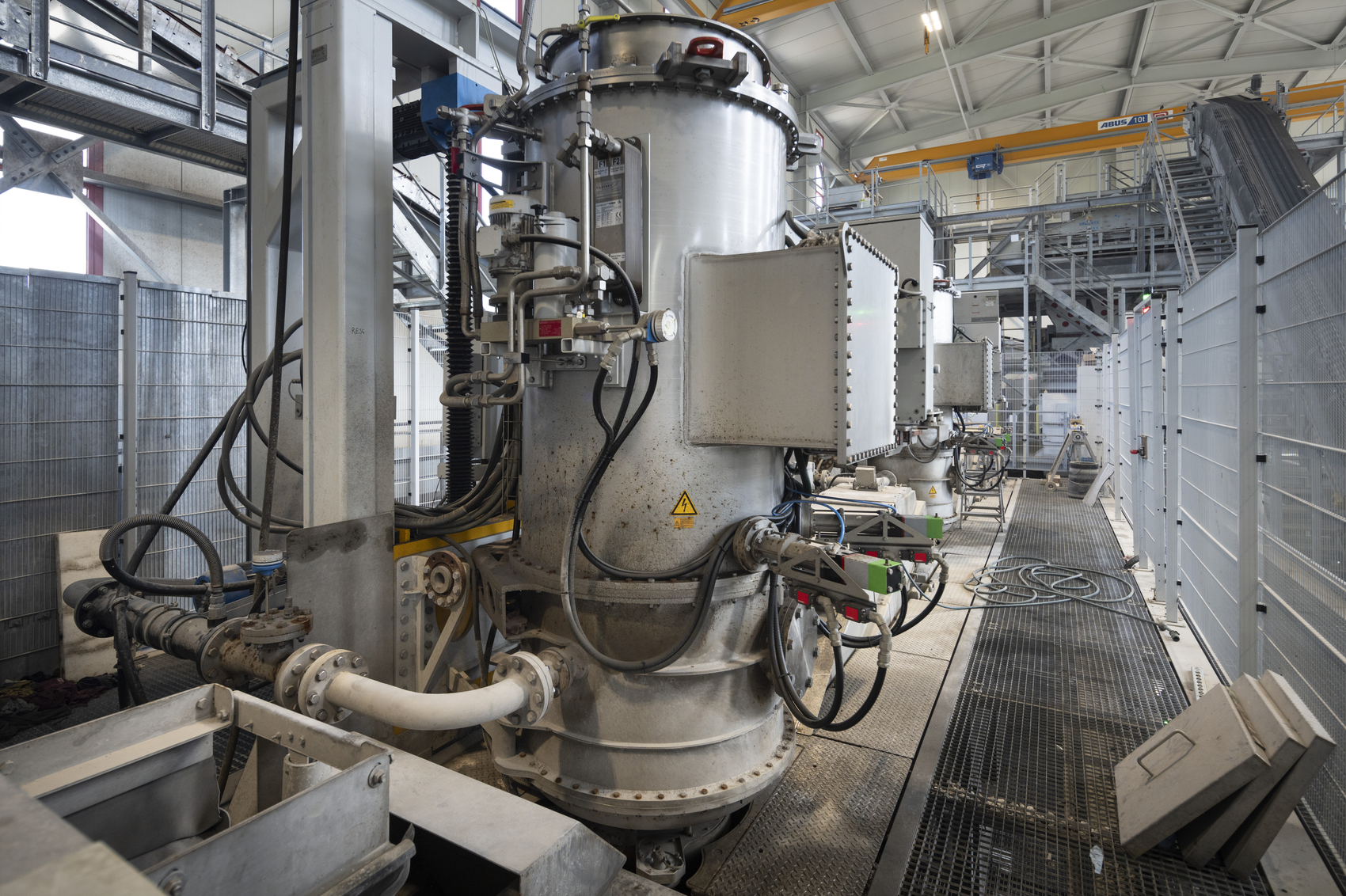
The principle: a high-voltage electrical field is created between two or more electrodes. Pulses of around 200,000 volts travel through a water bath in which the bottom ash is suspended. At those voltages and pulse rise times of a few hundred nanoseconds, water behaves counter-intuitively. It insulates better than the solid material it surrounds.
Tiny paths of electricity, called streamers, begin to grow from the electrodes. They are attracted to areas where the electrical field is distorted, such as grain boundaries or different metal particles within the material. When the streamers bridge the gap and pass through the material, a full electrical discharge occurs. The sudden expansion and collapse of the plasma channel emit powerful shockwaves that propagate through the solid, breaking it apart predominantly at grain boundaries and interfaces. The result is a highly selective fragmentation that separates different components without over-grinding them.
Why "along grain boundaries" matters
A mechanical crusher reduces material by force. It crushes everything roughly equally, regardless of internal structure. A piece of copper trapped inside a mineral matrix gets pulverised together with the mineral.
HVP does something different. By splitting along grain boundaries, it separates what is already separable. A copper inclusion comes out as recoverable copper. A mineral fraction stays as a clean mineral fraction. An iron particle keeps its useful properties. The process leaves clean materials with minimal residues.
That is why downstream sorting works more efficiently and reaches higher material qualities than standard methods. It is what makes industrial-scale metal recovery from bottom ash economically and technically viable.
From mining to waste-to-value
The technology did not start with bottom ash. It was originally developed to improve ore mining processes, silicon in particular, where preserving crystal structure mattered. After testing several ores, it became clear that bottom ash actually contains more valuable metals and minerals than any natural ore. The recycling angle and the environmental case became additional drivers in developing the technology further. Selfrag took the underlying physics and built an industrial-scale process around a different input stream than mining: incinerator bottom ash from Swiss waste-to-energy plants.
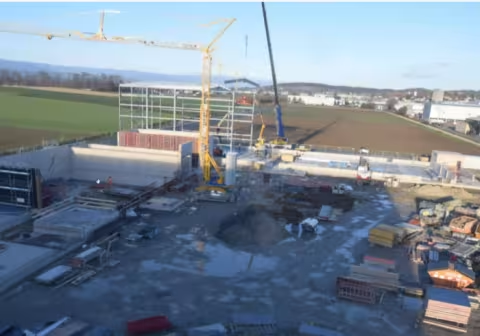
Centro Uno in Full-Reuenthal has been running commercially since 2023. Centro Due in Kerzers is under construction, with start-up planned for Q4 2026. Patents protect the industrial application. The water-based closed-loop design, the staged sorting that follows fragmentation, and the integration with Swiss waste-to-energy infrastructure are all proprietary.
What comes out
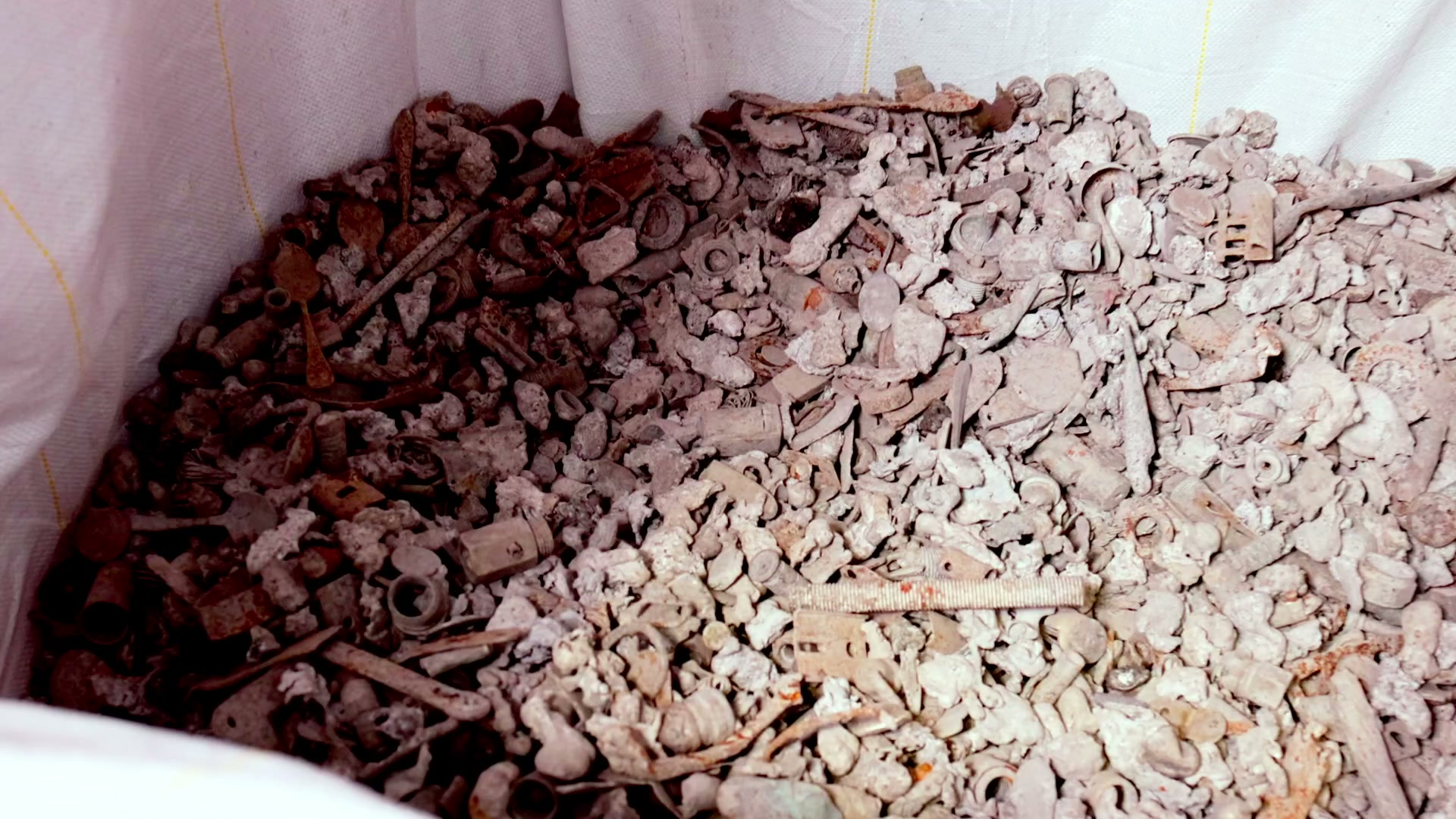
Per tonne of bottom ash that enters the process, the typical recovered fractions are split into ferrous and non-ferrous metals, including aluminium, copper, and precious metals such as gold and silver, plus a clean mineral fraction. The recovered materials re-enter the economy, where they replace virgin material. The mineral fraction goes to the cement industry. As a rule of thumb, around half the input mass leaves the process as recovered material with somewhere to go.
An older technology, a newer methodology
HVP is the engine. It has been recovering metals at industrial scale for years, before this work was being turned into verifiable carbon credits.
What got added on top is everything that turns those avoided emissions into a credit a serious buyer can pay for. Mass-balance audits. Emissions accounting against the right industry baselines. Mineralogical traceability. Independent academic and technical review. That is a separate, four-year piece of work that lives on top of the technology, not the other way around.
The technology answers the question of what is physically possible. The methodology answers the question of what a serious 2026 buyer can defensibly pay for. The two have to work together for industrial-scale carbon credits to hold up.
Fragen zu diesem Artikel oder unserer Technologie?
Kontakt aufnehmen ›Aktuelle News
Bei industriellen CO₂-Zertifikaten gibt es keine Abkürzungen
Vom Abfall zum Wert. Und jetzt zu CO₂-Zertifikaten.